For contributors
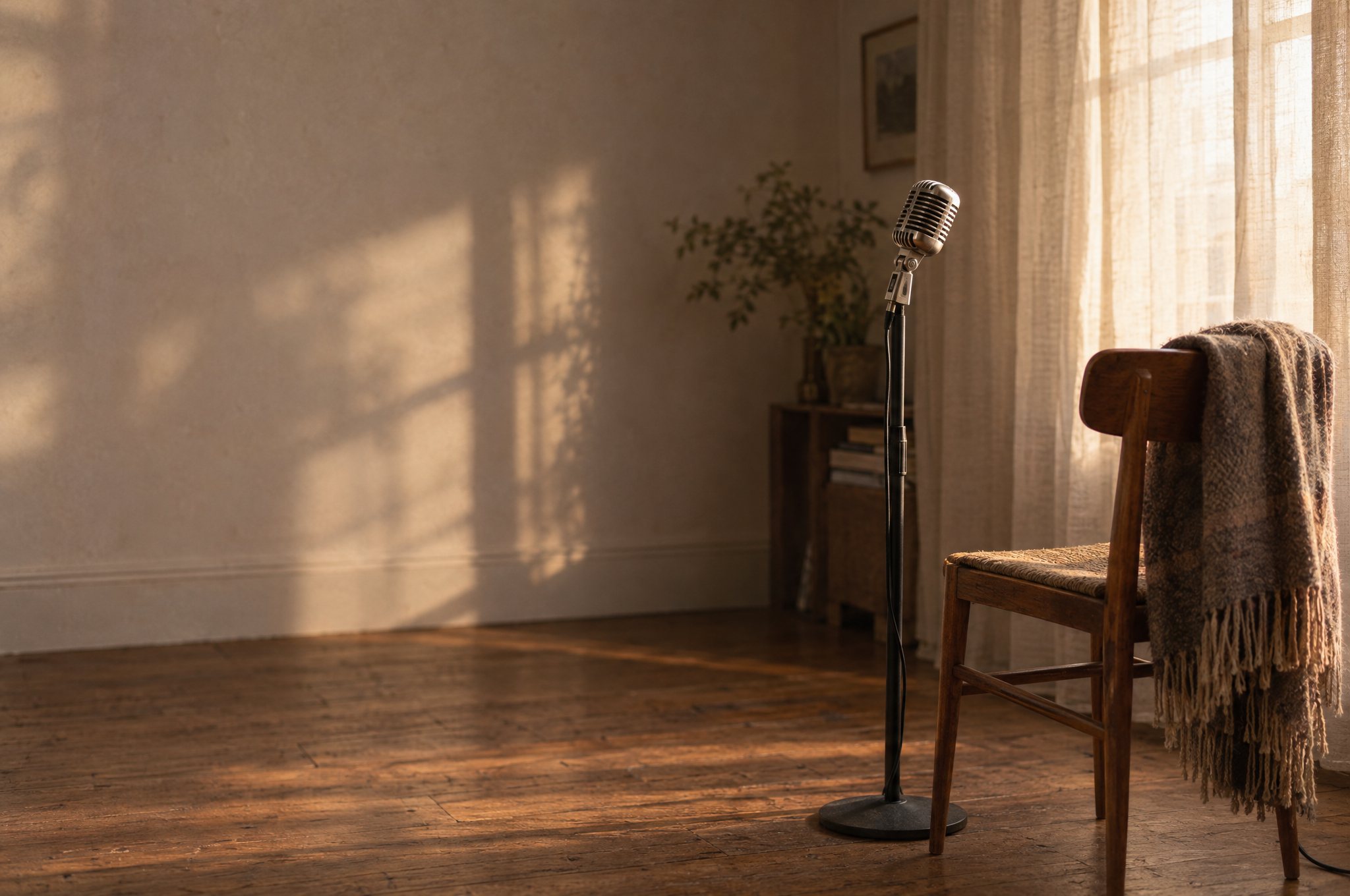
Take the mic.
Everything you need to write a Community Voices piece: what makes these land, the story territory worth exploring, what we need from you, and what happens after you send it.
The craft
What makes these land.
01
It should sound like you.
Your rhythms, your humor, your phrases. We publish largely as written, with a light pass for house style, and you bless every word before it goes live, including the title, your bio, and the tags on your card.
02
Seen, not taught.
This isn't an advice column and you don't have to have the answers. The strongest pieces stay in first person the whole way through. The moment you catch yourself writing “you should,” that's the signal to return to “here's what I did.” Readers take everything useful just from watching what happened to you.
03
The details are the door.
The specifics of your experience are what bring a reader inside it. The place you were sitting, the thing someone said, the small moment that stuck. Share the details only you can share. That's what makes a stranger feel like you wrote it for them.
04
End where your story actually is.
Resolved, unresolved, or somewhere in between, the honest ending is the right one. No send-off to the reader, no call to action. Your last line belongs to your story, not to them.
05
True stories, truly told.
This series runs on lived experience, which means it runs on trust. Readers take these pieces as true accounts, and we rely on you for that. Your own story needs no citations, it is the source. If a piece reaches beyond your experience to outside facts or figures (rarely needed, and never required), those need a source we can link. The accuracy of what you share is yours to stand behind, and that is part of what makes this lane worth standing in.
Your story
Territory worth exploring.
The story to tell is the one that feels like yours. There are no wrong answers here. But if it helps to have some fodder, a few directions we'd love to see someone take:
- Telling your kids
- A family member's layoff
- What took six months to know
- The movies that got you through
- What you'd do differently
- Going back to school
- The career pivot
- Life, adjusted
- Unexpected community
- Hidden gifts
- The grief you didn't expect
- The relief you couldn't admit
- What your body knew first
- What it asked of your marriage
- The visa clock
- On leave when it happened
- Losing your work spouse
- The 10am world
- Retired before you meant to
One note as you choose: nothing you share should put you at risk. If a detail could touch an agreement you signed, an open negotiation or legal matter, your employment eligibility, or anything else with stakes attached to your name, leave it out. The story survives without it.
And if now just isn't the right time to tell your story, that's okay too. The mic will be here when you're ready.
The checklist
What we need from you.
Seven things, one of them optional. Copy the list into a doc and fill it in as you go.
Your checklist
- 01
Article. Any format, any length. Long ones get read all the way through here.
- 02
Title. Yours to choose. Want options? We'll propose a few and you pick.
- 03
Bio line. One or two sentences that run at the top of your piece: who you are, the shape of your career, what you do now. See the stories in the series for examples. Or send your background and we'll draft yours for your approval.
- 04
Headshot. A recent photo of you, shoulders up. It runs beside your byline, on your piece, and on the title card we share. Professional is great; a well-lit phone photo works too.
- Send the original file, not a screenshot or a LinkedIn crop. At least 1500 pixels on the short side.
- Leave room around your head and shoulders. We crop it round, square and wide.
- Plain or uncluttered background, natural light, no filters.
- Only send a photo you have the right to share. If a photographer took it, tell us who so we can credit them.
- 05
Reader destination. Your site, LinkedIn, portfolio, or next thing. Your bio links wherever you want people sent.
- 06
Social handles. Wherever you'll post, so we can build the amplification plan around you.
- 07
Post copy.Optional Send your own social copy and we'll build timing around it. If not, no problem. It's your post either way.
One promise that holds through all of it: this is your story. We will never sand it down, speed it up, or make it ours.
After you send it
How the rollout works.
01
PinkSlipped publishes.
Your piece goes live on the site with your byline, your bio, your photo, and a title card with your name on it. Everything comes to you for approval first. Nothing about you publishes without your blessing.
02
You lead on social.
Once the piece is live, you post first, from your accounts, in your words. Your network meets your piece from you.
03
The team supports.
The founder and brand accounts amplify fast behind you, and the team shares from their own accounts. We coordinate the timing together so every post pushes the same wave.
For your post
A few LinkedIn tips.
Put the article link in your first comment.
Posts with external links get shown to fewer people. A link in the first comment consistently reaches further.
Engage early.
Replying to commenters in the first hour or two primes the algorithm and tells it the conversation is worth surfacing.
A photo of you performs very, very well.
Optional, but a personal photo beats a polished graphic almost every time. Personal over polished is what the feed rewards.
Avoid editing after you post.
Edits can reduce how far a post gets pushed. Give it one last read before you hit publish, then let it run.
Tag us.
Tagging us in your posts is encouraged. We will be in your comments early either way.
The door
When you're ready.
Drop your draft in a Google Doc and send the link back through the same conversation that brought you here.
Community Voices travels by personal invitation from the PinkSlipped team, so the person who invited you is your first reader and your way in.
Not invited yet? A three-line pitch, read by a person on our team, opens here soon.