The email went out at 8:47 in the morning.
Or it was a calendar invite. Fifteen minutes, no agenda, an organizer you'd never had a meeting with in your life.
By noon there were three hundred of you.
By six there were three hundred separate kitchens.
That is the part nobody names. The layoff was the most collective thing that has ever happened to your career — same morning, same script, same severance template with your name merged into the fourth paragraph. And then the recovery from it got handed back to each of you privately, like a coat at the end of a party.
The layoff was a group event. The aftermath got privatized.
The isolation is not a personality trait
You have probably explained it to yourself already.
You're a private person. You don't want to be a burden. You'll reach out once you have something to report.
None of that is the real reason.
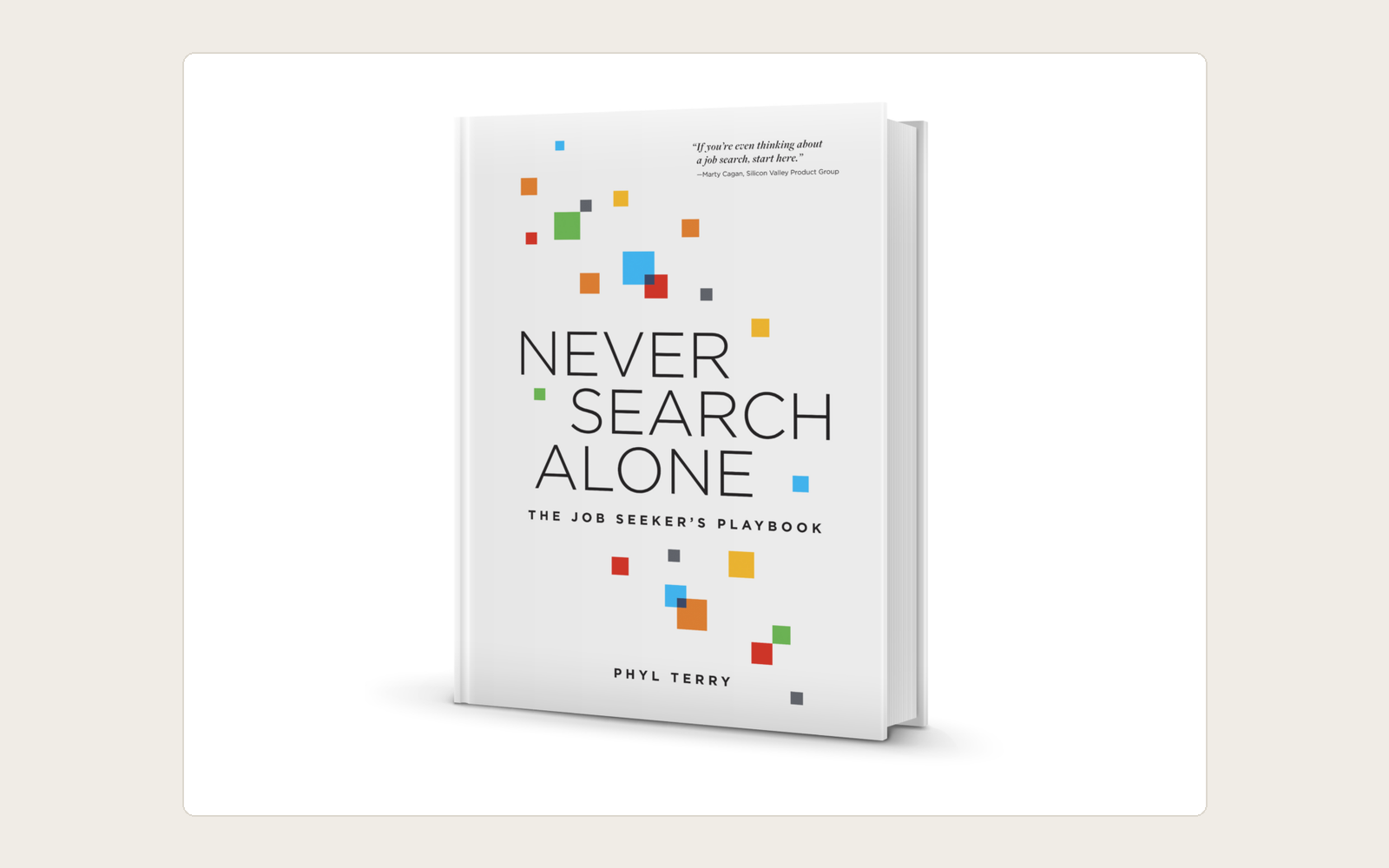
Phyl Terry spent twenty-five years working with job seekers and wrote the finding down in a book called Never Search Alone. It is not a comfortable finding, but it is a freeing one: everyone is afraid in a job search. Chief executives. New graduates. People with two offers already on the table. The fear is not information about you. It is the weather.
What matters is what the fear does when you're by yourself with it.
Alone, it compounds. It rewrites your résumé at one in the morning. It tells you that four hundred applications is a strategy, because volume at least feels like effort. It tells you not to answer the text from the coworker who got the same email you did, because you have nothing to report yet.
The instinct to withdraw shows up at exactly the moment withdrawing costs the most.
There is one step you cannot do by yourself
Terry's method has a phrase at the center of it: candidate-market fit. Before you network, before you interview, before you send anything, you're supposed to find the intersection of three things. What you want. What the market wants. And how the market sees you.
Read that third one again.
How the market sees you.
You do not have access to that. Nobody does, from the inside. You have your own account of your last four years, and it is sincere, and it is not the account a hiring manager is running. The gap between those two stories is where good candidates stall for six months without ever learning why.
There is no version of closing that gap alone. You have to ask former colleagues what you were actually good at. You have to ask people in your field the uncomfortable question — if you were in my shoes, what would you do? You have to ask a recruiter what roles they think you fit, instead of asking them for a lead.
Which is to say: the step most people skip is the step that requires other people. It gets skipped because it requires asking, and asking is the thing a layoff makes hardest.
Two rooms, doing two different jobs
We built Pack Finder because of the first room.
Within days of any sizeable layoff, someone starts a Slack. Someone else starts a LinkedIn group. A thread of three people becomes a thread of thirty. That room is fast and it is specific — it knows your company, your severance language, your VP, the exact wording of the email. It's where somebody says “mine said that too,” and something in your chest unlocks. Most people never find theirs. That's the problem we're trying to fix.
But a pack has a half-life. It's brightest in the first month, and quieter by the third, because everyone in it is running the same race at the same time and nobody has spare hands.
The second room solves a different problem, and it's the one we want you to know about now.
Never Search Alone runs free peer groups called Job Search Councils. You're matched with four to six people at a similar career stage, most of them strangers, deliberately pulled from different industries. A trained moderator from inside the group runs the meetings. Your group writes its own charter, and you work the method together until each of you lands.
Nobody in that room knows your old org chart. That's not a limitation. That's the whole point. They have no stake in the story you've been telling yourself about why it happened, so they can see the part of you the market sees.
It costs nothing. There is no paid tier behind the free one. Book sales help fund it, which is why they ask you to read it before you join — that's the only price of admission. Buy a copy, or borrow one from a library.
Ask early, and ask badly
Here is the thing about asking for help: people are bad at it precisely when they need it most, and the reason is that they're waiting to have a clean version of the request.
You will not have a clean version. Not in week one. Not in week three.
Ask anyway. Ask before you know what your next role is called. Ask before your résumé is finished. Ask a person who got the same email you did, and ask five people who have never heard of your company.
The three hundred of you went home to separate kitchens because that's how the system is built, not because that's how it has to go.
Find your pack. Or join a council.
Just don't run the hardest search of your life in a room with one person in it.